
Securing the Baltic’s Digital Lifelines
Amber Cable is a next-generation subsea infrastructure project designed to strengthen resilience, security, and sovereign connectivity across the Baltic Sea region.
Linking Finland, Estonia, Latvia, Lithuania, Poland and Denmark, the system combines high-capacity digital connectivity with integrated sensing capabilities to support the protection of critical subsea infrastructure.

Finland

Estonia

Latvia

Lithuania

Poland

Denmark
Why Amber Cable
The Baltic Sea region has become one of Europe’s most strategically important corridors for both digital connectivity and critical infrastructure.
Challenges
- Connectivity depends on a limited number of subsea routes
- Physical infrastructure is increasingly exposed to disruption
- Demand from cloud, data centres and AI systems continues to accelerate
Amber Cable responds by delivering
- New, resilient subsea connectivity routes
- Integrated infrastructure monitoring capabilities
- Coordinated, cross-border infrastructure development
Beyond Connectivity
A dual-purpose infrastructure platform
Amber Cable is designed as more than a subsea cable. It represents a new category of infrastructure combining:
Connectivity
- High-capacity subsea system across the Baltic region
- Direct integration with European connectivity hubs via Denmark
- Increased route diversity across Northern and Central Europe
Infrastructure Awareness and Protection
- Integration of Distributed Acoustic Sensing (DAS)
- Support for monitoring and safeguarding subsea assets
- Enhanced situational awareness across critical infrastructure corridors
Project Overview
Overview
Amber Cable is a planned multi-country subsea cable system spanning the Baltic Sea region.
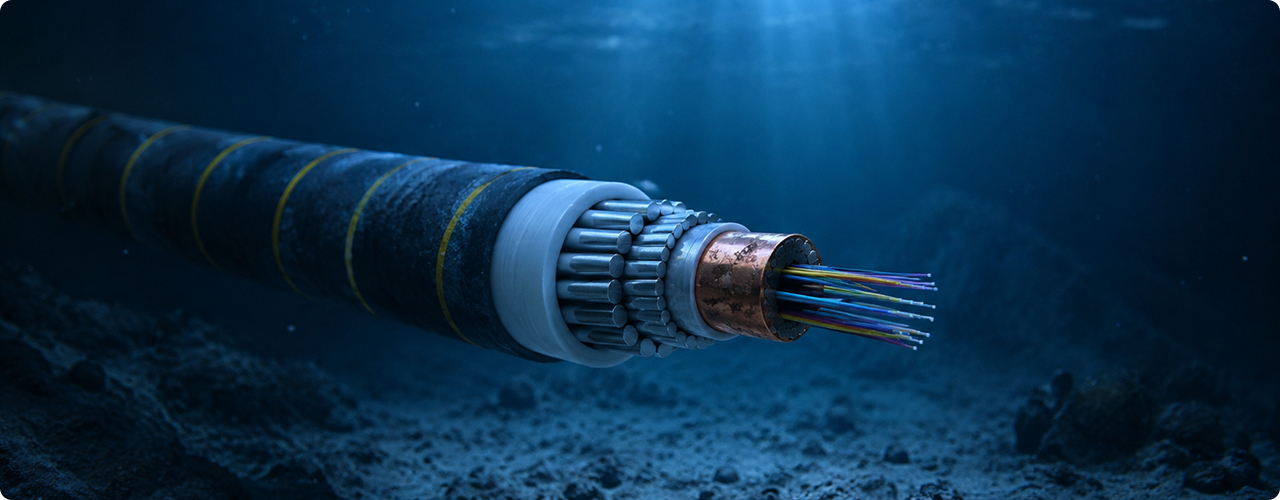
Beyond Connectivity
Built for Europe's infrastructure priorities
Amber Cable aligns with Europe's objectives for
- Secure and resilient digital infrastructure
- Protection of critical subsea assets
- Cross-border connectivity and cooperation
- Scalable infrastructure to support data and AI growth
A Changing Baltic Context
The Baltic Sea region continues to grow in both geopolitical relevance and digital infrastructure importance, requiring:
- Increased resilience and redundancy
- Protection-focused infrastructure design
- Coordinated regional planning
Development Status
Advancing toward implementation
Amber Cable is currently progressing through early-stage development and engineering activities, building toward Front-End Engineering Design (FEED) and future implementation.
Current workstreams include:
Marine and route studies
Engineering and route analysis
Risk and infrastructure protection assessment
Permitting and stakeholder coordination
Integrated sensing architecture development
Cost and delivery planning
Technology and Approach
Integrated sensing, resilient by design
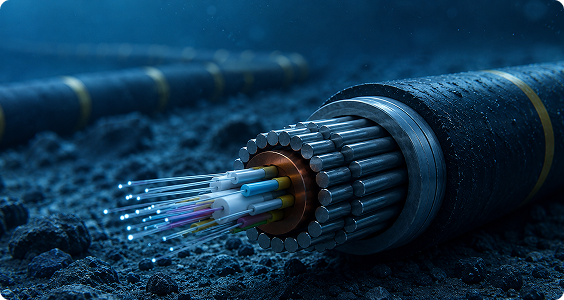
Amber Cable incorporates Distributed Acoustic Sensing (DAS) concepts to enable monitoring and protection of subsea infrastructure.
- Infrastructure awareness
- Event detection along cable routes
- Enhanced protection planning
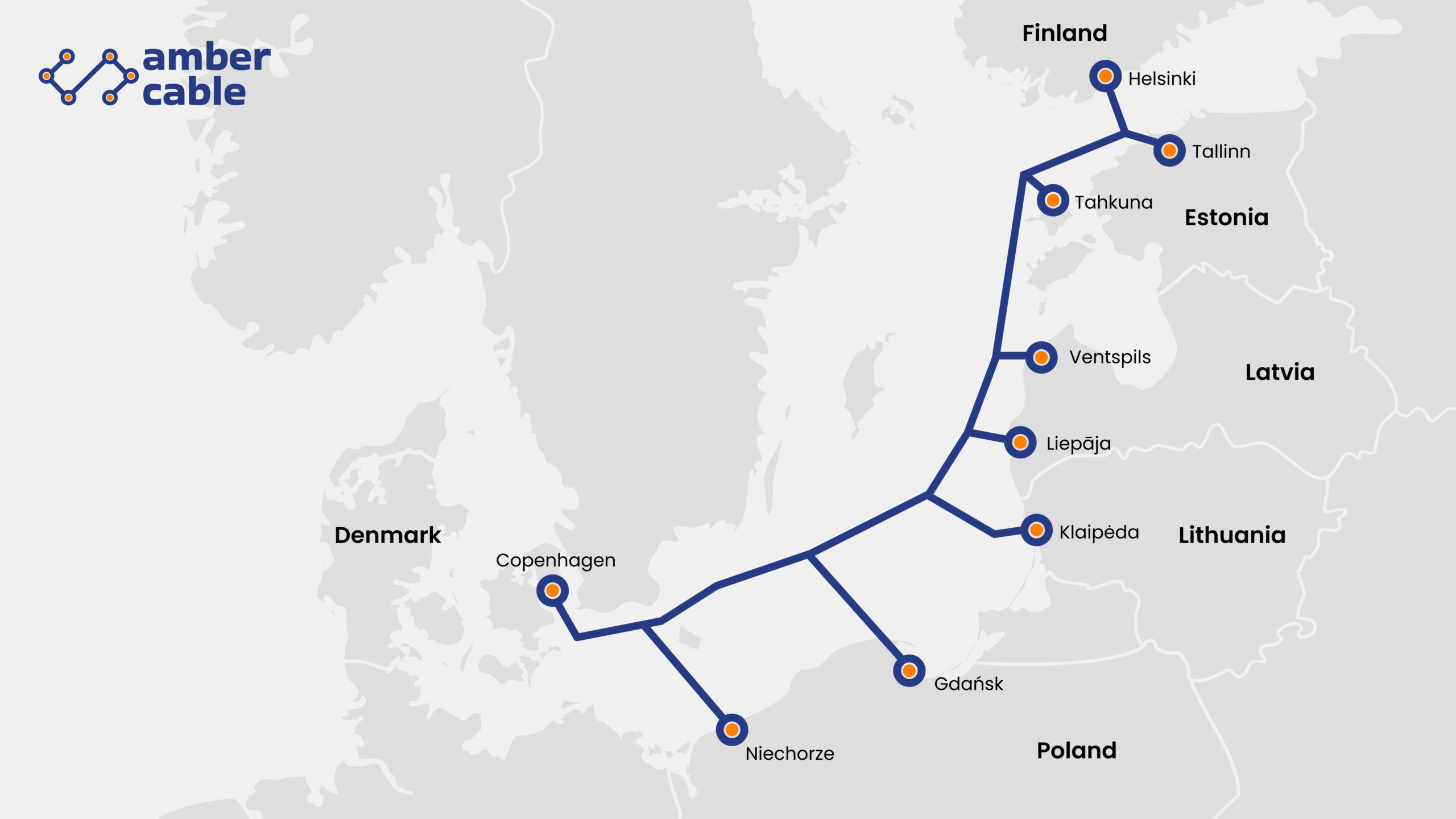
The system is designed to:
- Strengthen regional redundancy
- Reduce dependency on limited routes
- Provide diversified connectivity corridors across the Baltic
Infrastructure development and implementation planning
The Amber Cable project is currently progressing through early-stage studies and stakeholder coordination activities to support future implementation planning and investment readiness.
Further technical, engineering and delivery assumptions will be published as studies progress toward FEED maturity.
Strategic Relevance
Development Roadmap
Phase 1
Studies and stakeholder engagement
Phase 2
FEED and permitting progression
Phase 3
Technical planning and implementation preparation
Phase 4
Deployment and operational readiness
Further milestones will be communicated as the project progresses.
About
Amber Cable SIA

Amber Cable SIA is a Latvia-based company developing next-generation subsea infrastructure for the Baltic region, combining connectivity and sensing technologies to support resilient and secure networks.

Simon Fletcher
Leadership
The project is led by Simon Fletcher, with experience in international submarine cable development. Previous experience includes:
- Delivery of multiple international and domestic submarine cable systems
- Leadership of infrastructure initiatives involving international institutions, including the Asian Development Bank and European Investment Bank